SpAItial announces an API that splits Gaussian splat worlds into separate objects
SpAItial plans a Segmentation API that splits a Gaussian splat world into labelled objects, each exportable as its own mesh.
Give the new Segmentation API a Gaussian splat world and it divides the scene into labelled objects, each exportable as its own mesh. SpAItial says this is the starting point for physics in its generated worlds. It is coming soon to the SpAItial API, with early access by request.
Why it mattersGenerated splat worlds become editable scenes instead of one frozen capture.
What is announced
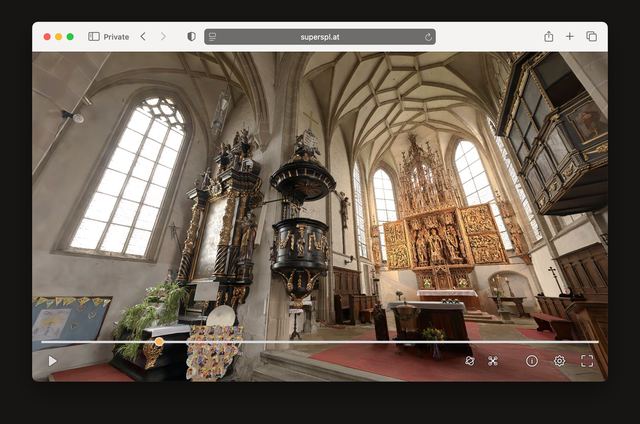
SpAItial makes AI tools that generate 3D worlds, which it delivers as Gaussian splats. It has announced a Segmentation API for those worlds. The company says you send it a Gaussian splat world, and the API divides the scene into objects, each with a label. Every object can then be exported as its own mesh, which is a surface model that can be edited or used in game engines.
SpAItial describes this as the starting point for physics in its generated worlds. On its developer page, the company says its models reason about appearance and physics. The page does not explain how the physics would work.
Availability
The company says the Segmentation API is coming soon to the SpAItial API, with early access available on request. The developer page links to a Startup Program that offers credits and priority API access, and to a page on credits and early access for creators. The page does not describe the segmentation endpoint, its inputs, its limits or its price.
Output formats today
The developer page describes world generation that returns SPZ or SOG files. Both are compressed splat formats made for real-time viewers. The sample request sets the output format to sog. Mesh output is not mentioned on the page, so the mesh export of the new API is so far only the company's claim.