Ink Studio and pixelart-gaussiansplat: two open-source toolkits for pixel-art Gaussian splats
Two free MIT-licensed toolkits turn 3D shapes into pixel-art Gaussian splats, one as a Node.js library and one as a browser viewer.
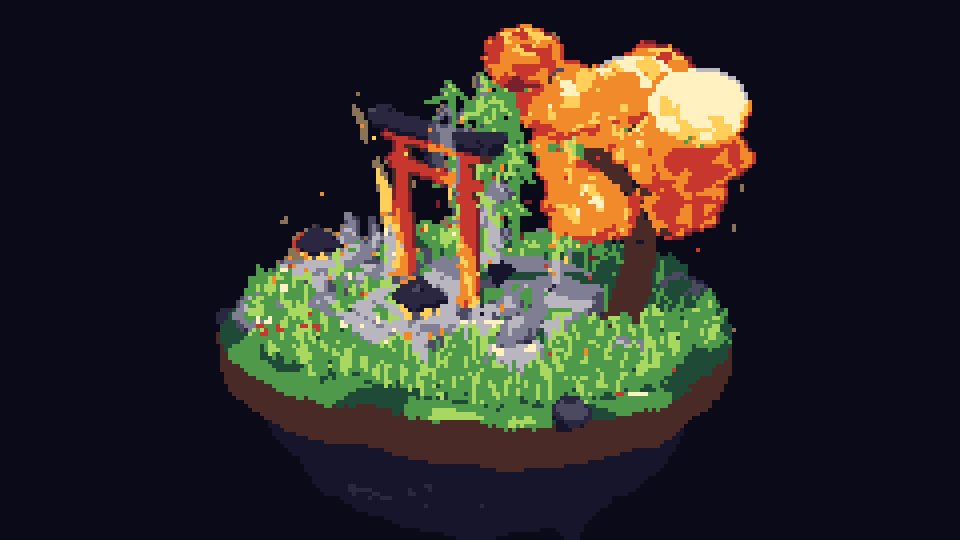
Ink Studio, from Shapeshift Labs, sculpts signed-distance solids and bakes them into pixel-art Gaussian splats, with palettes and dithering, animation clips and state machines, particles, and physics such as breaking, rubble, cloth, hair and rope. It is a Node.js library and command-line renderer (MIT), not a finished editor. cobanov's pixelart-gaussiansplat renders pixel-art splats in the browser with three.js and Spark and converts glTF or GLB models, rigged ones included, into splat scenes (MIT).
Why it mattersA retro look with real 3D depth, built from code instead of hand-placed sprites.
Ink Studio
Ink Studio comes from Shapeshift Labs. You build a solid from signed-distance formulas, which define a shape by how far each point in space is from its surface. The toolkit then bakes the shape into pixel-art Gaussian splats, which are soft points that together form a 3D picture. It runs on Node 18 or later and declares no runtime dependencies. You can use it from the command line, or embed its source bundle in a browser app.
The feature list covers palette-based materials, patterns, animation rigs and state machines, and simulations such as particles, cloth, rope, fluids and breaking. It imports OBJ, glTF and GLB meshes, exports GLB files with materials and animation clips, and includes a WebGL 2 browser renderer as well as a CPU renderer for the command line.
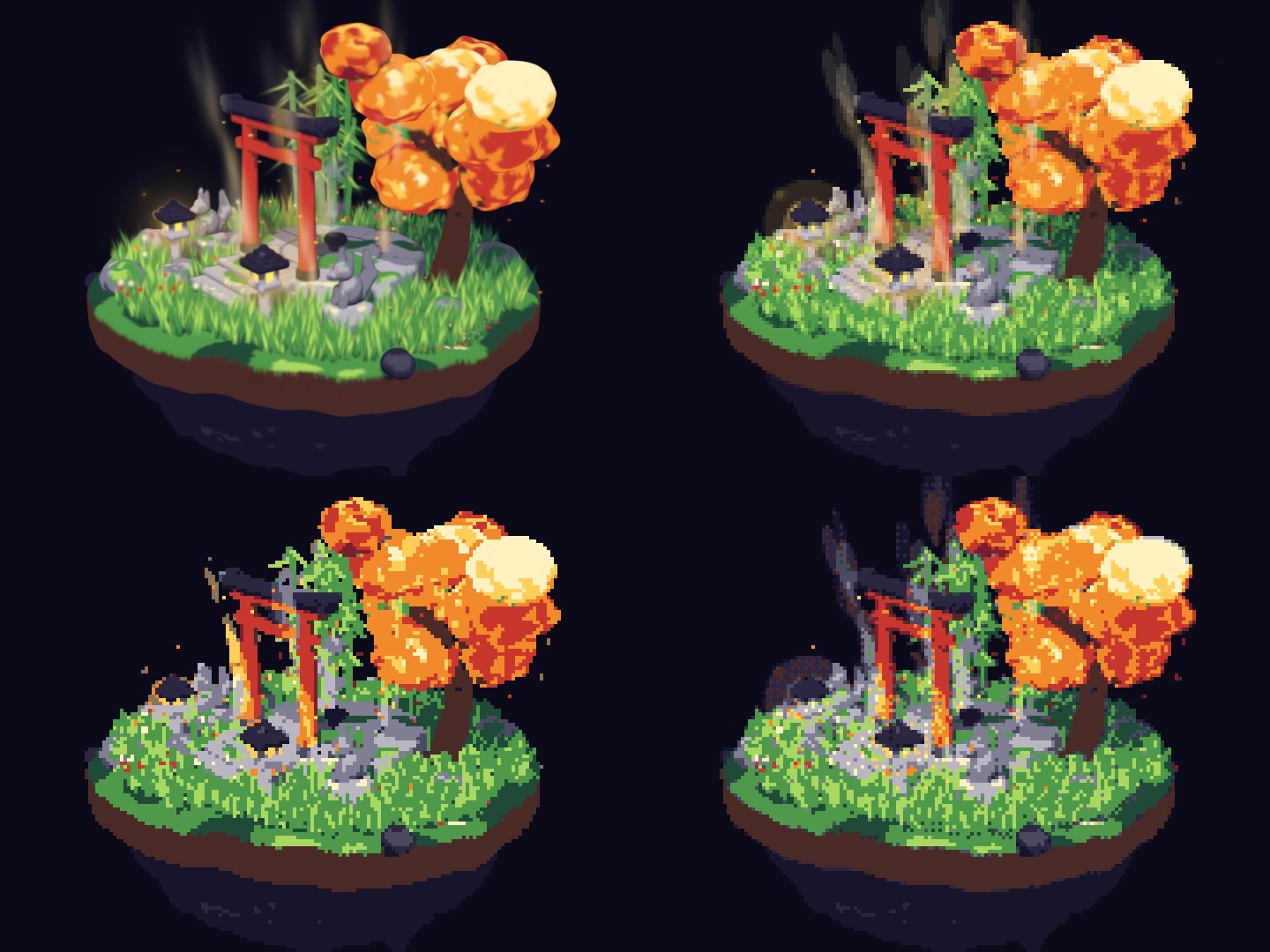
pixelart-gaussiansplat
This project by cobanov is a browser viewer built on three.js and Spark. Each scene is a single JavaScript file, and the starter scene is about 60 lines long. A converter turns glTF or GLB models into splats, and rigged models keep their animations. A side panel changes the pixel size, dither, palette, supersampling and outlines.
It needs Node 20.19 or newer, or 22.12 or newer on the 22 line, and a browser with WebGL 2. The README names two limits. Scenes are lit once when they are built, so static scenes stay static. The pixel grid is fixed to the screen, so zooming does not change the pixel size.
Licence
Both projects are under the MIT licence. The README of pixelart-gaussiansplat says scenes generated by its code follow the same licence. The creature models in its public/models folder come from the game Kervan. The README says those are included as examples only and are not covered by the MIT licence, so check them before reuse.