PixVid and MPEG-Diffusion: two research methods for faster video generation
Two papers aim to speed up video generation: PixVid works directly in pixels, and MPEG-Diffusion renders only the key region in high resolution.
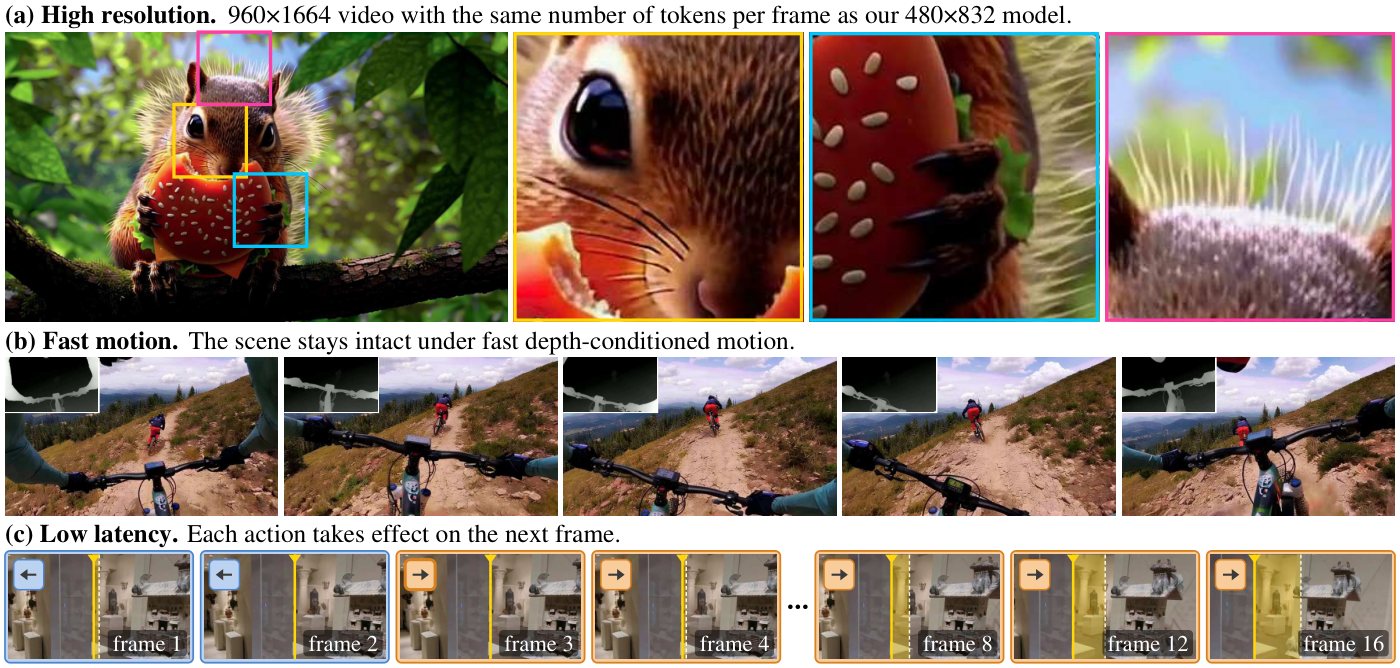
PixVid (arXiv 2611.17336) swaps the VAE decoder of Wan2.1-14B for a convolutional pixel head so the model generates one frame at a time in pixel space; its authors say this doubles resolution for the same token count and lets the model answer a control input on the next frame. MPEG-Diffusion, from researchers at Roblox and UT Austin, renders the important region of a video at full resolution and the rest at low resolution, and reports 4.8x faster denoising on Wan2.1 14B. Neither paper links code yet.
Why it mattersBoth point to cheaper, more responsive video models for interactive use.
What is new
Two research papers describe ways to make video diffusion models faster. A diffusion model builds an image or video step by step from noise. Most leading video models first compress each frame into a small code, called a latent, and generate in that smaller space. The PixVid paper argues that this limits resolution, control and response speed.
PixVid, by Yanke Song, Shuo Chen and co-authors, removes the step that turns latents back into pixels. The authors keep the diffusion transformer, the main generating part, and replace the decoder with a convolutional head that writes pixels directly. The model is fine-tuned from Wan2.1 14B. The abstract says it is competitive with the latent baseline and produces 2 times the resolution at the same token count. Tokens are the small chunks of data the transformer processes.
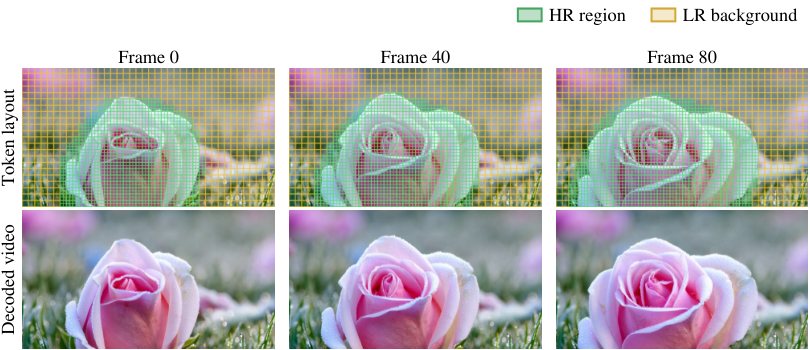
How MPEG-Diffusion works
MPEG-Diffusion takes a different route. It renders the important part of each frame in high resolution and the rest in low resolution, so the transformer handles fewer tokens. The paper uses three parts.
- Dual-resolution attention lets each part of the frame read from its own resolution.
- A mixed-resolution decoder blends the two resolutions before decoding, to avoid visible seams at the boundary.
- A small linear head picks the high-resolution region by itself, so no region has to be given in advance.
Results and limits
The MPEG-Diffusion paper says the method processes about 30 percent of full-resolution tokens. It speeds up denoising by 4.8 times on Wan2.1 14B and 3.8 times on Wan2.1 1.3B, measured on one NVIDIA B200. In a blind user study, raters chose its output over full-resolution generation 45.2 percent of the time, and that setting was about 3.3 times faster at 720p.
The PixVid project page says a 4-frame latent block at 30 frames per second can add up to 133 ms of delay, while PixVid applies each control input on the next frame. The page links to code and an interactive demo. Neither page stated a licence, and no weights release was confirmed in what was read.