LongCat-Video-Avatar 1.6: open talking-avatar videos longer than 10 minutes
Meituan has released LongCat-Video-Avatar 1.6, an open model that makes talking or singing people from audio, with longer clips and better lip sync.
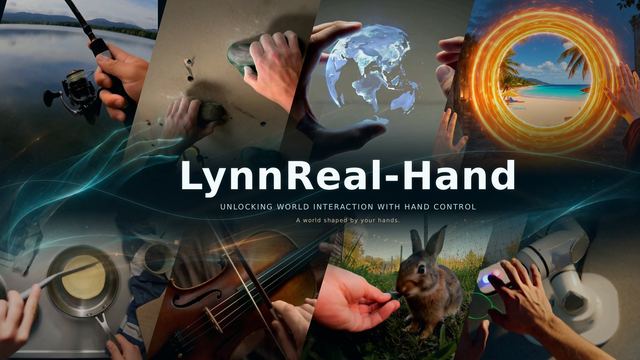
Meituan's model turns a photo plus audio, or text plus audio, into a talking or singing person, with one or several speakers. Version 1.6 improves lip sync, facial and body motion and identity consistency over videos longer than ten minutes, and speeds up inference with an 8-step mix of two distilled LoRAs. The weights are MIT licensed; the example commands use two GPUs, with optional FP8 or INT8 quantisation.
Why it mattersLong presenter and explainer videos from a single photo, with weights you can run yourself.
What is new
Version 1.6 is the successor to LongCat-Video-Avatar 1.5. It makes a person speak or sing from an audio track. The input is either speech with text, or speech with a reference image. The model also accepts several speakers in one scene. Its makers say it can make videos longer than 10 minutes by continuing the video in segments, though the page gives no exact maximum length.
According to the model page, version 1.6 gives more natural lip movement, with fewer strained mouth shapes and better stability in the mouth area. It also reduces errors that build up over a long video, and its makers say the pipeline runs faster. The page gives no speed figures.
How it works
The model uses an input file that lists the audio, the text or image, and the options. Example files are in the project's assets folder. The page also describes a faster mode that uses two distilled LoRAs. A LoRA is a small add-on file that changes how a model behaves. In the default setting the model runs eight steps: the first four use only the first LoRA, and the last four use only the second one.
- Single-person and multi-person modes
- Video continuation for long clips
- Optional INT8 or FP8 weight compression to save memory
- Optional compilation to speed up repeated runs
What you need
The page does not give the minimum video memory. The setup steps use Python 3.10, PyTorch 2.6.0 with CUDA 12.4, and FlashAttention. The examples use two GPUs. The page says FP8 can lower quality, and it advises against using FP8 and INT8 together.
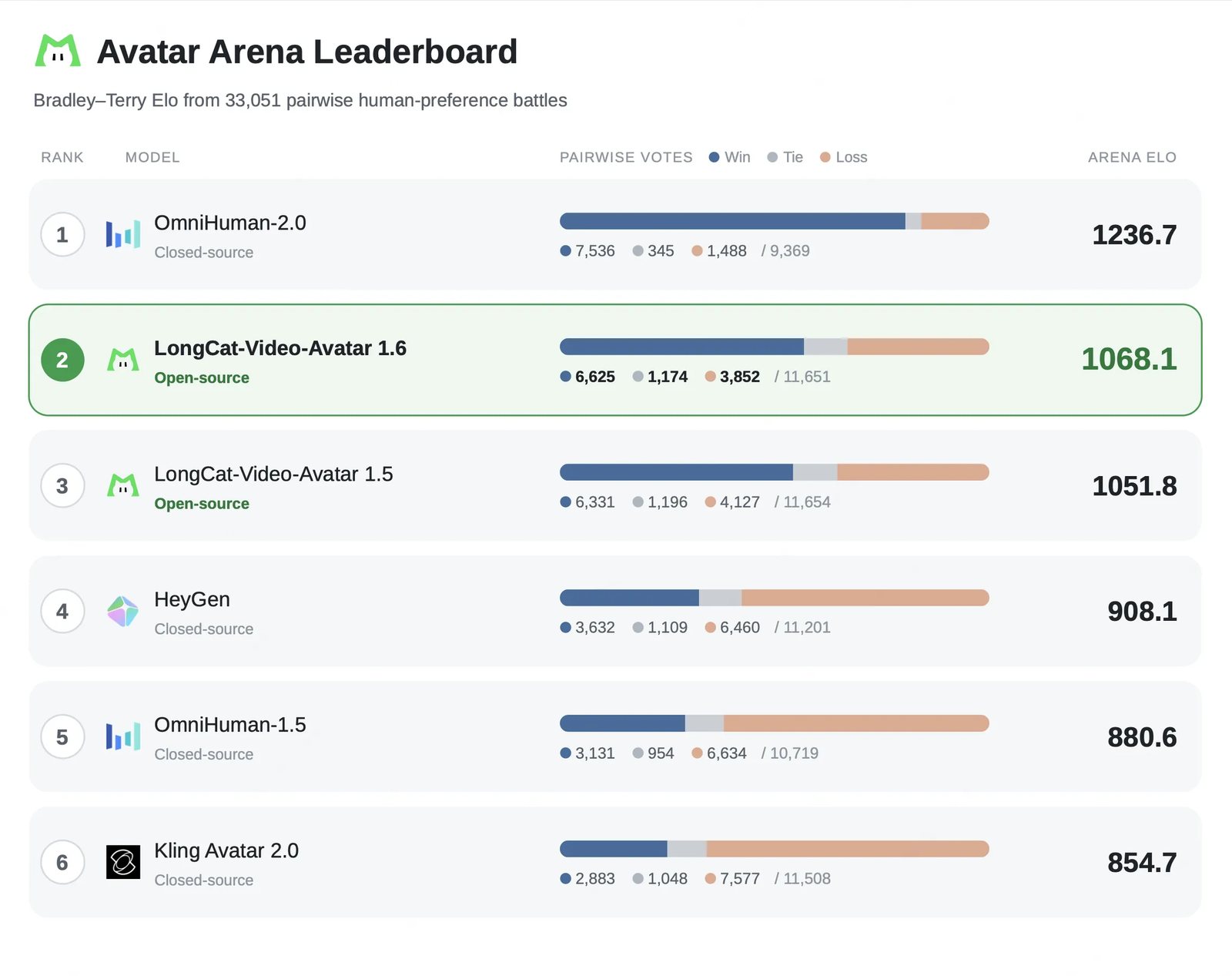
The model weights are under the MIT licence, which the page says does not give rights to Meituan's trademarks or patents. In a human preference test of 33,051 votes, the makers rank version 1.6 second, with an Elo score of 1068.1, behind OmniHuman-2.0 at 1236.7. The test was run by the makers, so an independent check is not available.